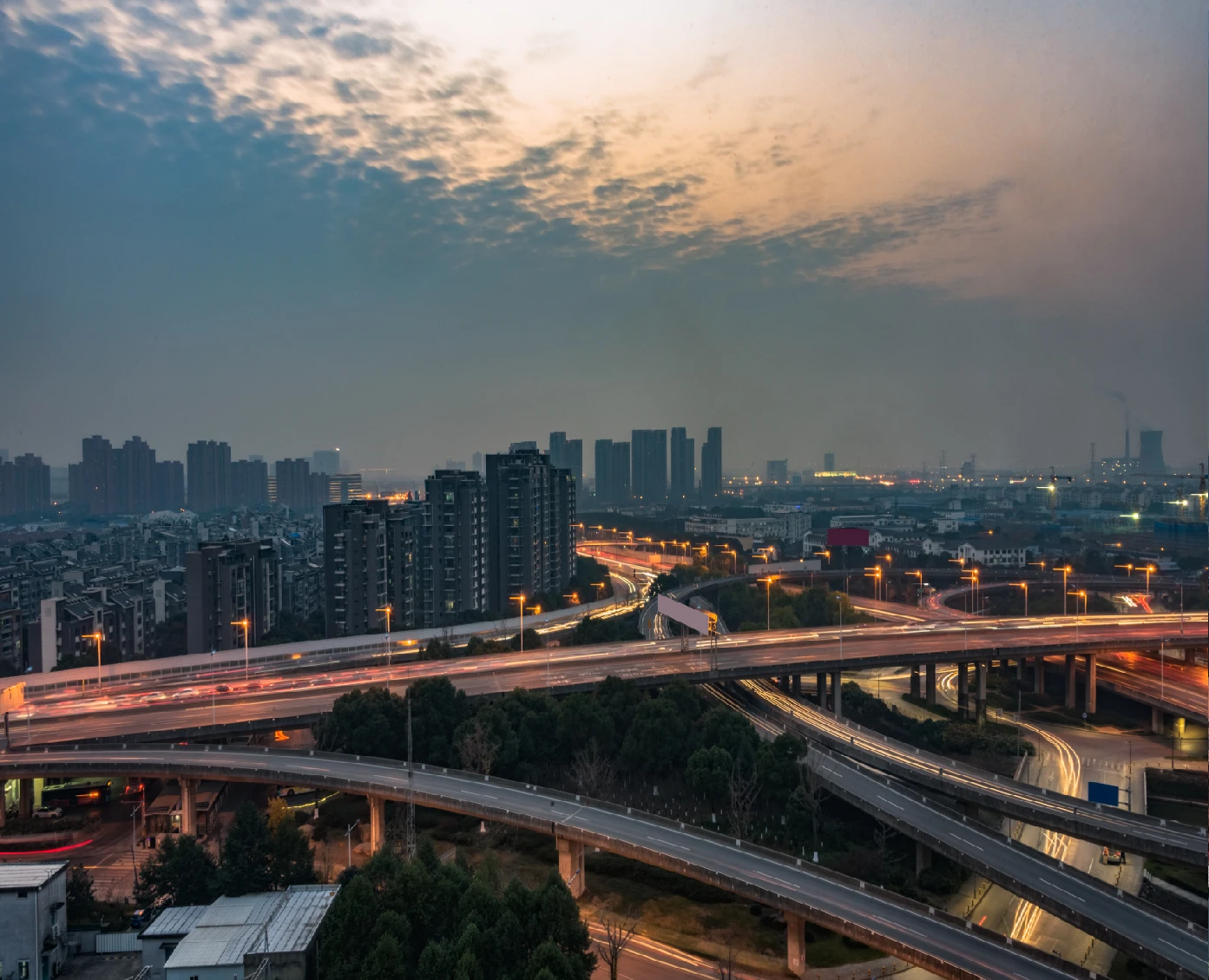
The residential requirements of modern homebuyers are changing steadily with time. People are no longer purchasing a flat only because it is located in a popular neighbourhood. They are also considering daily commute, social infrastructure, future appreciation, rental demand and the overall quality of life offered by the location.
This is why the debate between North Bangalore and South Bangalore has become particularly relevant in 2026. Bengaluru’s average residential asking price increased from approximately ₹10,950 per sq ft in September 2025 to around ₹12,300 per sq ft by June 2026. However, this growth has not been uniform across the city. Therefore, buyers need to understand individual micro-markets before deciding where their money should go.
North Bangalore vs South Bangalore at a Glance
| Factor | North Bangalore | South Bangalore |
| Residential Character | Emerging and growth-oriented | Mature and well-established |
| Key Advantage | Airport access and infrastructure expansion | Existing social infrastructure and metro connectivity |
| Property Type | Newer gated communities and integrated developments | Established apartments and mature residential pockets |
| June 2026 Micro-Market Asking Rate | Around ₹11,150/sq ft | Around ₹11,300/sq ft |
| Recent Micro-Market Movement | Around 2.6% | Around 2% |
| Rental Character | Growing around employment and airport corridors | Established across mature employment hubs |
| Suitable For | Long-term investors, professionals and NRIs | Families, end-users and rental-focused buyers |
The regional figures above are asking-price indicators and should not be treated as transaction prices for every locality. Individual projects in Hebbal, Thanisandra, Jayanagar or JP Nagar can vary significantly.
Why Is North Bangalore Attracting More Buyers?
The development of North Bangalore has accelerated because of airport-led growth, expanding employment corridors and continued infrastructure investment.
Locations such as Thanisandra, Hebbal, Yelahanka and Hennur are attracting professionals who want to remain close to technology parks, commercial centres and major arterial roads. Moreover, newer residential projects in these areas often provide larger gated communities with landscaped spaces, recreational facilities and modern apartment layouts.
However, one must distinguish existing advantages from future promises. Kempegowda International Airport, Manyata Tech Park, Hebbal’s major road network and established residential pockets around Thanisandra and Yelahanka already support demand today.
On the other hand, developments such as the planned Devanahalli Business Park, ring-road projects and further transport improvements form part of the medium and long-term investment story. The proposed Devanahalli Business Park itself has been discussed as a 412-acre commercial development centred around sectors such as aerospace and IT.
Thus, buyers evaluating North Bangalore flats must decide whether they want an established northern location or are comfortable waiting for an emerging corridor to mature.
Why Does South Bangalore Remain Popular?
Conventionally, South Bangalore has been one of the city’s most established residential regions. Areas such as Jayanagar, JP Nagar, Banashankari and Bannerghatta Road have mature schools, hospitals, shopping facilities and public transport networks. Therefore, buyers selecting South Bangalore flats do not have to depend heavily on future development for everyday convenience.
This established ecosystem remains one of the region’s biggest strengths. A family moving into an apartment in an older South Bangalore neighbourhood generally depends less on proposed infrastructure because healthcare, education, retail and public transport are already part of everyday life.
Existing metro connectivity in several areas can also make daily travel comparatively manageable. Therefore, buyers searching for South Bangalore flats may prioritise present-day convenience over the possibility of stronger infrastructure-led growth in the future.
What Are the Latest Market Trends?
Current data indicates that Bangalore’s property market is becoming increasingly micro-market driven. By June 2026, the city-wide asking-price benchmark had reached approximately ₹12,300 per sq ft, while North Bangalore stood around ₹11,150 per sq ft and South Bangalore at approximately ₹11,300 per sq ft.
However, price alone does not reveal the entire investment picture. North Bangalore’s stronger proposition emerges when the holding period extends beyond the immediate future. Infrastructure-led markets around Devanahalli and the airport corridor may require several years before planned commercial and transport investments fully influence residential demand.
South Bangalore offers a different proposition. Much of its value already comes from mature neighbourhoods and social infrastructure. Therefore, its investment case may appeal more strongly to buyers looking for an established end-use market rather than relying heavily on future development.
Which Region Offers Better Investment Potential?
Property investment depends heavily on the buyer’s time horizon.
For a buyer with a relatively short holding period, choosing only on the promise of future infrastructure can create unnecessary uncertainty. North Bangalore becomes more interesting for investors with a medium to long-term perspective because airport-linked commercial activity, new employment centres and transport projects have more time to influence demand.
Consequently, someone considering investing in Thanisandra, Hebbal or another northern micro-market should evaluate what already exists around the property and what remains proposed. South Bangalore, meanwhile, offers a more mature market where demand is already established. This can be useful for buyers who prefer greater certainty instead of depending heavily on future infrastructure.
What Does Rental Data Tell Us?
Rental demand exists in both parts of Bangalore, but the underlying reasons are different.
For North Bangalore, current market references place a typical 2 BHK rent broadly around ₹25,000 to ₹40,000 per month in stronger locations, with gross residential rental yields commonly falling around 3% to 4%. A separate 2026 market comparison places the Hebbal and North Bangalore 2 BHK rent range at approximately ₹25,000 to ₹40,000, again indicating gross yields of roughly 3% to 4%.
Thanisandra benefits specifically from the employment ecosystem around Manyata Tech Park and Nagawara. Consequently, well-connected apartments in Thanisandra may appeal to professionals who want to reduce workplace commuting.
However, rental yield should never be calculated from monthly rent alone. Maintenance charges, property tax, furnishing, vacancy periods and the purchase price can reduce the owner's actual return.
South Bangalore continues to benefit from tenants working around long-established employment and education corridors. Therefore, rental investors should compare individual projects rather than assuming that one half of the city will automatically outperform the other.
Which Side Is Better for Modern Family Living?
Modern families need much more than bedrooms and parking spaces. They require safe outdoor areas, fitness facilities, children’s activity zones, comfortable spaces for senior citizens and areas where people can socialise without travelling far.
Newer projects in the northern corridor often have greater scope to provide these facilities because they are developed on larger land parcels.
This is where Multigen India’s focus on human-centred and multigenerational planning becomes relevant. Rather than treating amenities merely as a checklist, its residential approach considers how children, working adults and senior family members use the same community differently. Such planning can become particularly valuable when evaluating newer luxury flats in Thanisandra for long-term family use.
South Bangalore offers a different advantage because much of the supporting lifestyle infrastructure already exists outside the residential development itself.
Does Connectivity Decide Everything?
Connectivity is extremely important, but it should not be viewed only through distance on a map. For example, a home located 20 kilometres from your office may still be convenient if the route offers reliable metro or road access. On the other hand, a shorter journey through heavily congested roads can become exhausting every day.
Therefore, buyers should study actual travel patterns. If your workplace is around Manyata Tech Park, Hebbal or the airport corridor, northern locations may be considerably more practical. If your office, children’s school and family network are concentrated around JP Nagar, Electronic City or Bannerghatta Road, southern neighbourhoods may provide better everyday convenience.
Why Developer Quality Still Matters
Even the best location cannot compensate for poor construction quality or weak project management. Buyers must verify:
- RERA registration
- Construction specifications
- Layout planning
- Possession commitments
- Water and power arrangements
- Maintenance systems
- Developer reputation
This becomes even more important in emerging corridors where different projects may offer very different levels of construction quality, legal readiness and long-term maintenance.
So, Which Region Should You Choose in 2026?
There is no universal answer! Choose South Bangalore if your priority is established social infrastructure, existing metro access and a neighbourhood that already supports your everyday routine. Consider North Bangalore if workplace access, the airport corridor, newer gated communities and a longer investment horizon are more important to you.
The key is to separate current value from expected future value. Existing roads, workplaces, schools and hospitals can be evaluated today. Proposed business parks, metro routes and other infrastructure may strengthen a locality later, but they should not become the only reason for purchasing a property.
Hence, the best apartment is not necessarily located in the most famous part of Bangalore. It is the property that combines a suitable location, a credible developer, practical design and long-term relevance for your lifestyle.